Last updated November 20, 2026
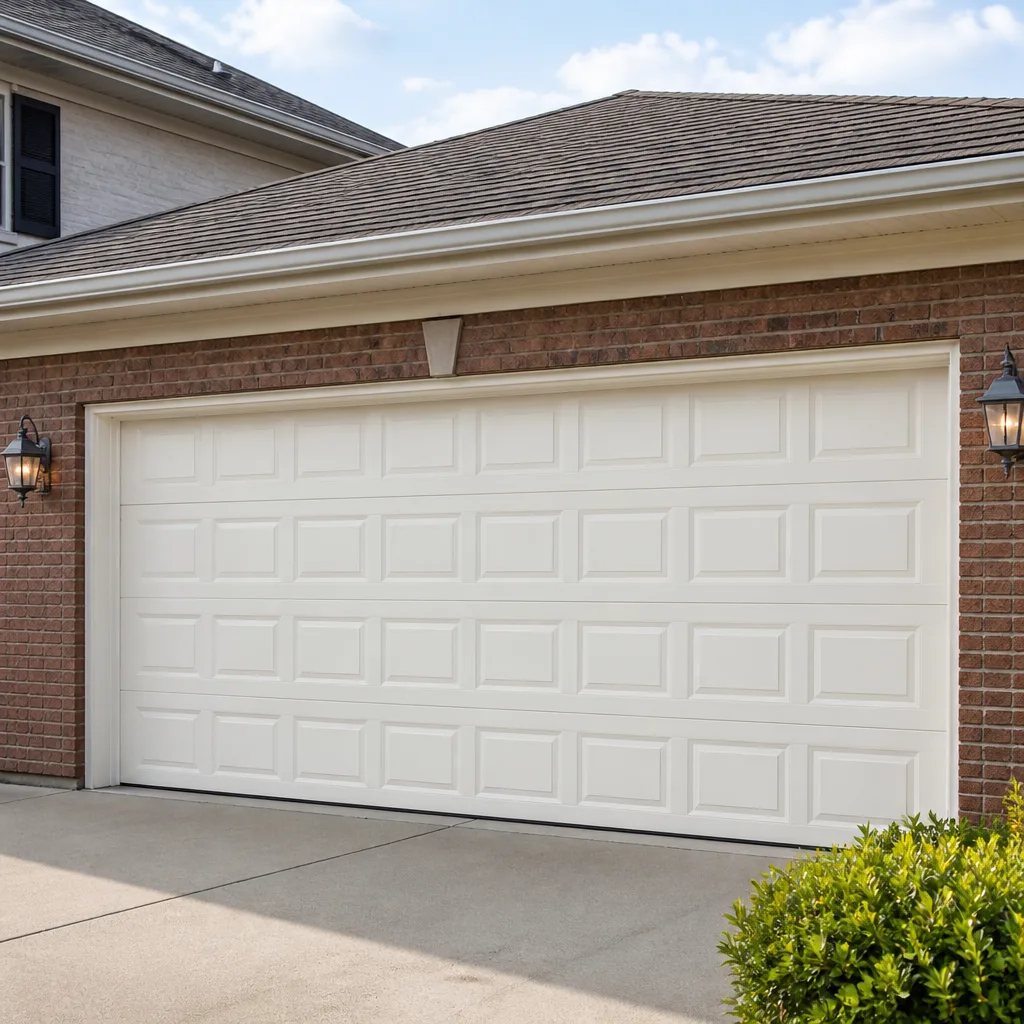 Raised-panel steel
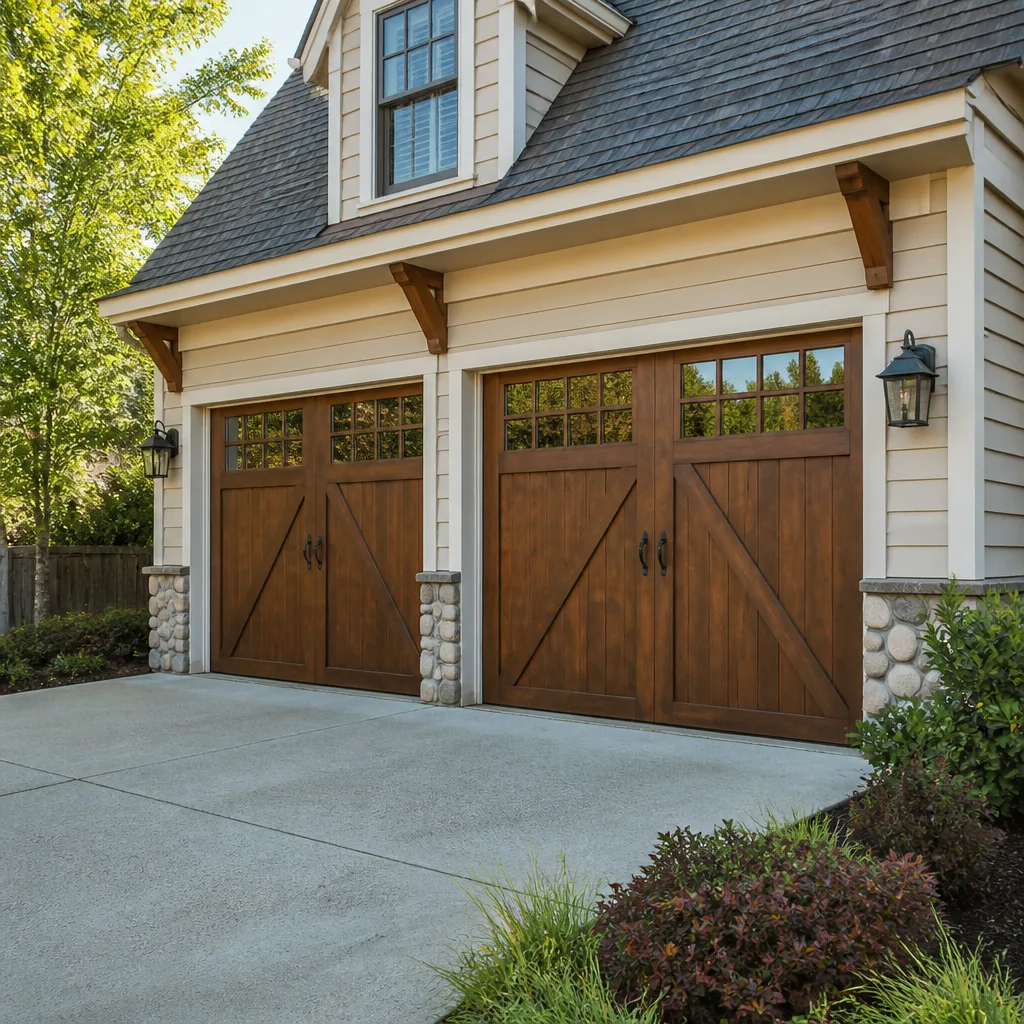 Carriage house
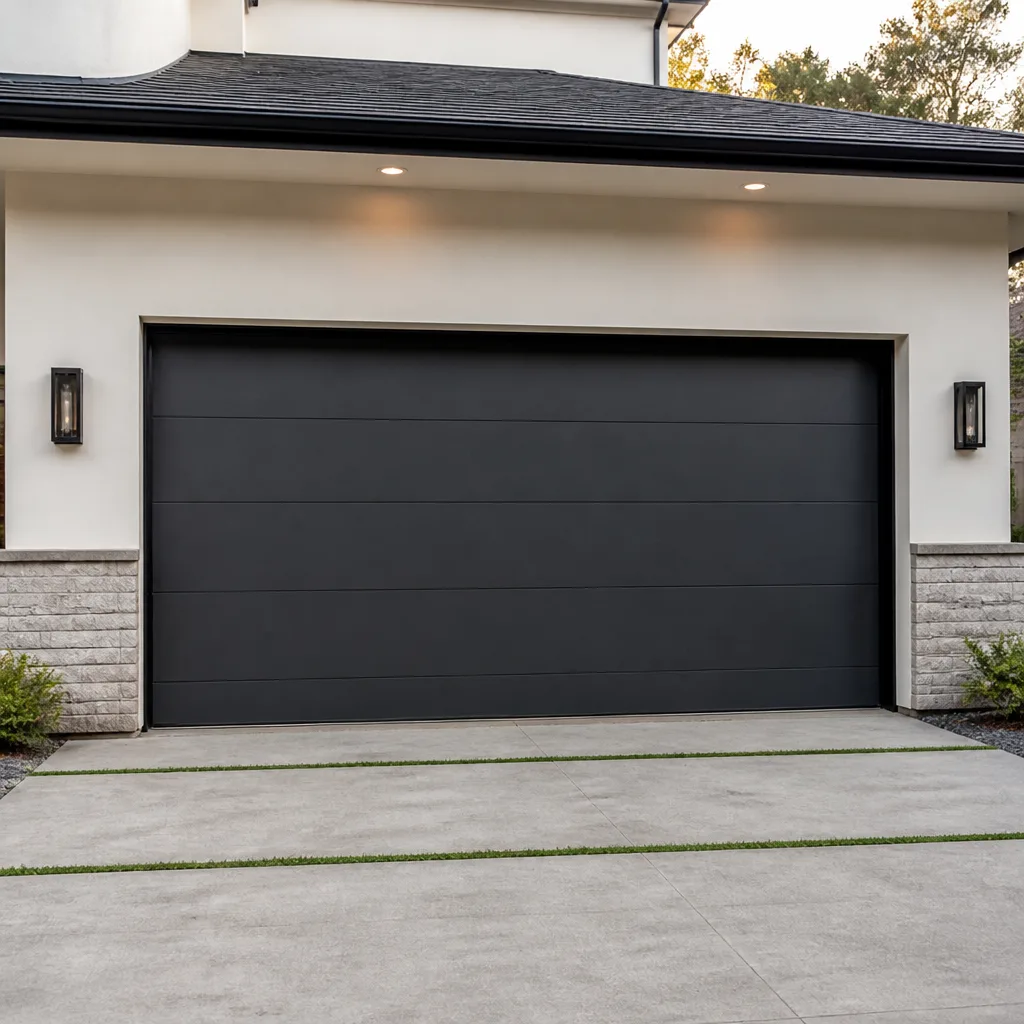 Modern flush
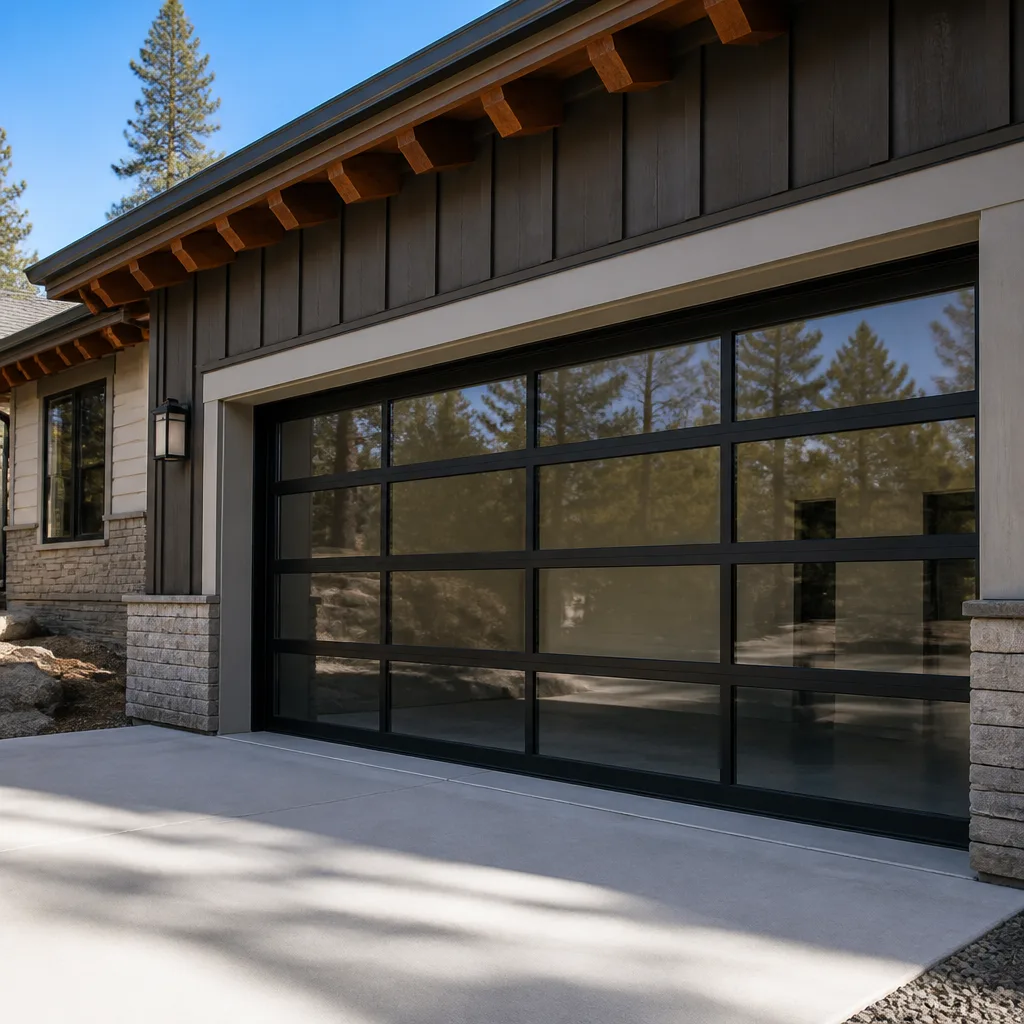 Full-view glass
 LiftMaster openers
 Chamberlain openers
Full 25-point door and opener safety check with every visit - springs, cables, rollers, tracks, and your LiftMaster or Chamberlain opener included
You get a price before we start. It does not change when the pro arrives.
Get your free estimateGarage Door Warning Signs: A Kamm’s Corners Homeowner’s Reference Guide
That slight grinding noise your door started making three weeks ago isn’t the door “breaking in.” It’s a worn roller telling you exactly how much time you have before the door comes off its track. Most garage doors don’t fail without warning. They give you weeks of warnings that look like isolated quirks: a little noise, a small gap, a remote that takes two presses. The problem is that nobody reads those quirks as one system until the door stops moving. This guide breaks down what each sound, sight, and behavior actually means, which ones are safe to watch, and which mean you stop using the door today. It’s written for the doors and openers we see across Kamm’s Corners every week.
Quick Answer
A garage door that grinds, pops, rattles, or squeals, leans to one side, shows uneven gaps, or has frayed cables is telling you a component is wearing and needs attention before it fails. Grinding and squealing usually point to rollers or lack of lubrication, popping often points to a failing spring or loose hardware, and rattling usually points to loose bolts or worn hinges. Any door that won’t move or has a visibly broken spring should be considered off-limits until a technician looks at it.
Styles & brands we work with
- Raised-panel steel
- Carriage house
- Modern flush
- Full-view glass
- LiftMaster openers
- Chamberlain openers
Table of Contents
- How to Read the Four Noises Your Door Makes
- Visual Signs Most Homeowners Walk Right Past
- The 30-Second Balance Test That Reveals Spring Wear
- Opener Behavior: Mechanical Drag vs. Logic Board Failure
- Watch It vs. Stop Using the Door Now
- Why Kamm’s Corners Weather Is Hard on Doors
- A Simple Seasonal Checklist for Kamm’s Corners Homes
- What Waiting Actually Costs You
How to Read the Four Noises Your Door Makes
The four noises a garage door makes aren’t interchangeable. Grinding, popping, rattling, and squealing each come from a different part of the system, and treating them as “just a noisy door” is how small repairs turn into big ones. Getting the diagnosis right at the sound level saves you from replacing the wrong part. Here’s what each one usually means.
- Grinding is almost always roller or track related. Worn steel rollers that have lost their bearing surface scrape against the track. It can also come from a bent track section or debris caught between the roller and the rail. Grinding left alone wears the track and accelerates roller failure.
- Popping usually means a spring problem or loose hardware. A torsion spring that’s starting to fail can pop or snap audibly as it releases tension. Loose hinge plates or bolts can also pop under load. Popping is one of the noise categories we take most seriously, because spring failure is the most dangerous thing that can happen on a garage door.
- Rattling is the least urgent but still worth tracking. Loose bolts, worn hinges, and a door that’s out of alignment rattle on the way up and down. Left alone, loose panels can work their way into the track path and cause a bigger jam.
- Squealing is usually dry metal on metal. Rollers, hinges, and torsion springs all need periodic lubrication, and dry components squeal before they fail. A squeal is the easiest noise to fix if you catch it early.
If you can’t tell which of the four you’re hearing, note when it happens: on the way up, on the way down, or only in one spot along the track. That timing narrows the cause down fast, and it’s the first question any good technician will ask. When the noise is coming from the opener motor housing rather than the door itself, that points toward garage door opener repair rather than a door issue.
Visual Signs Most Homeowners Walk Right Past
Sound is only half the story. Some of the most reliable warning signs on a garage door are things you see and don’t register, because they develop so slowly you stop noticing them. Check these every few months, ideally after a season change when the door has been cycling in different temperatures.
- Uneven gaps at the bottom. Stand inside the garage and look at the daylight under the door. A door that’s level across the whole bottom is working correctly. One that has a bigger gap on one side is leaning, and a door that leans is fighting the springs every time it moves.
- A slight lean in the whole door. Step back and look at the door from the outside, ten or fifteen feet away. A door that leans even a few degrees is out of balance, and imbalance usually traces back to spring tension, a bent track, or a worn cable.
- Frayed cable strands. Look at the cables running down the sides of the door. Good cables have a smooth, tight braid. Frayed cables show loose wire ends sticking out near the drum or the bottom bracket, and a frayed cable can snap without warning. Stop using the door if you see one and call a technician.
- Bent or dented track. Run your eyes down the vertical track on each side. Any kink or bend means the rollers can’t travel smoothly, and the door can come off the track at that point.
- Rust or corrosion spots. Rust on the hinges, tracks, or panel edges points to moisture exposure, which is common in garages that take on humidity in the warmer months.
- Loosened bolts. Grab a hinge plate with a gloved hand and try to wiggle it. If it moves more than a hair’s width, the bolt is loose.
None of these are cosmetic. Each one is a moving part telling you it’s carrying more load than it was designed for. If a visual check turns up an issue you can’t pin down, a free estimate from a local pro is the fastest way to sort it. We test every door we quote and tell you exactly what’s worn and what’s holding.
The 30-Second Balance Test That Reveals Spring Wear
This is the single most useful test you can run on your own garage door, and it’s the one nobody tells you about. It reveals spring wear months before a spring actually snaps. You’ll need both the door and the opener to cooperate, so run it when you’ve got a few minutes.
- Pull the manual release cord to disconnect the opener. On most openers this is a red handle hanging from the rail.
- Lift the door by hand about halfway up.
- Let go, carefully, at that halfway position.
- Watch what happens. A properly balanced door stays within an inch or two of where you let go. A door that drops has weakening springs. A door that rises on its own has springs that are too tight or an adjustment issue.
- Reconnect the opener by pulling the door back to the closed position and re-engaging the release.
If your door drops more than a foot on the balance test, the springs are tired. If it drops all the way, stop using the door and call a technician. Springs are under enormous tension, and a door without enough spring support is one that can slam or come off track with a person standing underneath. Never attempt to adjust or replace a torsion or extension spring yourself. That’s a job for a trained technician, and it’s exactly why we treat garage door repair as a specialist service rather than a handyman job. A spring replacement is a matched-pair job in most cases: one spring is replaced with its partner, and the quote reflects that pair.
Run the balance test once in spring and once in fall, when Kamm’s Corners temperatures swing the most. If you’ve never run it before, your first result is a baseline, not a verdict. Write down the halfway height so you have something to compare against next time.
Opener Behavior: Mechanical Drag vs. Logic Board Failure
Opener problems get blamed on the opener when the door is the actual culprit, and blamed on the door when the opener is the actual culprit. The two problems look similar from the driver’s seat of your car, but they need completely different fixes. Here’s how to tell them apart.
Signs the door is dragging the opener:
- The opener strains or slows down at one specific point in the door’s travel
- The opener is fine with the door disconnected (run it in manual release and it moves smoothly)
- The door body is heavy or hard to lift by hand
- The opener shuts off mid-travel and reverses back down without a light flash sequence
Signs the opener itself is failing:
- The opener’s wall button and remote both stop working at the same time
- The lights work but the motor doesn’t run
- The opener runs a few inches and stops every time, regardless of door weight
- The opener opens when you press the wall button but the remote won’t respond (and the battery is fresh)
- The opener beeps or flashes a diagnostic code, which most LiftMaster and Chamberlain units do
Logic board failures are common on older units, and so are travel-limit problems and gear failures. Wi-Fi and smart openers add a third category: connectivity issues that have nothing to do with the motor. If your opener brand is LiftMaster, Chamberlain, or Genie, we know the diagnostic codes and the common failure points on each line. We don’t treat opener repair as an upsell; it’s a dedicated service on its own.
One honest note: with an opener more than about fifteen years old, repair sometimes makes less sense than replacement. We’ll tell you that straight rather than patching a unit that’s going to fail again next year. That’s a big part of what our technicians bring from their up-to-eleven years of experience on openers.
Watch It vs. Stop Using the Door Now
Not every warning sign means the same thing. Some you can watch for a couple of weeks while you book a repair. Others mean the door should not move again until a technician has looked at it. Getting this wrong is how people get hurt. Here’s the split, in plain terms.
Watch It (Book a Repair Soon, But the Door Is Usable)
- Squealing on the way up or down
- Occasional rattle
- A slow remote that takes two presses
- Small rust spots on hinges or track
- An uneven gap of under an inch that hasn’t gotten worse
- A slowly increasing grinding noise
Stop Using the Door Now
- Any visible broken spring. The door is now being held only by the opener, and the opener is not designed to carry that weight. Using the door can burn out the motor or bring the door down.
- A frayed or snapped cable. A cable under partial load can whip or recoil. This is a serious hazard.
- A door that dropped more than a foot on the balance test
- Any popping sound followed by the door refusing to move
- A door that has come off one track or is running at an angle
- A door that reverses on its own before reaching the floor (the safety sensors may be blocked, or the springs may have let go)
- Bent torsion tube or snapped safety cable on an extension spring system
When in doubt, treat a warning as a stop. The cost of a technician visit is always less than the cost of a door landing on a car, a person, or the garage structure itself. Springs, cables, and the counterbalance system are the moving parts most likely to cause injury, and they’re the ones we handle with the most care.
Why Kamm’s Corners Weather Is Hard on Doors
Kamm’s Corners sits on Cleveland’s west side, and the seasonal pattern here works on garage doors in a specific way. Winters bring repeated freeze-thaw cycles, which means the door and its track expand and contract roughly once per cold snap. Those cycles loosen bolts, stress welds, and work a little more slack into springs over time. Summer humidity then rusts the exposed steel that winter loosened. The net effect is that an older door in Kamm’s Corners gets more wear per year than the same door in a mild climate.
Local housing stock matters too. The west-side neighborhoods around Kamm’s Corners have a lot of homes from the mid-twentieth century, many with single-car garages on the original wood or steel doors. Those doors were built to last decades, but the springs and hardware on them have usually been replaced at least once, and the second replacement is often where a homeowner notices the noise and imbalance that go with end-of-life springs. A door that’s gone through two spring sets is usually a candidate for a full-door assessment, not a third spring swap on a tired system.
Snow and ice are the other Kamm’s Corners factor. A door that gets packed with snow at the bottom seal sits higher on one side, which drags the opener and can bend a track over a single storm. During heavier winters, a door that starts grinding after a snow event is often just dirty or iced tracks. Clear the bottom of the door before every cycle in snowy weather, and if the grinding doesn’t go away when conditions dry out, that’s a real wear sign, not a weather issue.
If the door itself is showing rot, deep dents, or panel separation after years of this cycle, that’s when garage door installation becomes the better conversation. We work with Clopay and Amarr doors that hold up to this climate and can tell you which models are worth looking at for a west-side home.
A Simple Seasonal Checklist for Kamm’s Corners Homes
Ten minutes a season is all it takes to catch most warning signs before they turn into a broken door. Print this out or screenshot it.
- Look at the gap. With the door closed, check daylight under the whole width. Even across the bottom means the door is level.
- Listen on a full cycle. Stand inside the garage and listen from open to close. Note any grinding, popping, rattling, or squealing.
- Run the balance test. Manual release, halfway up, let go, watch. Record the height.
- Inspect the cables. No frayed strands, no rust near the drums.
- Wiggle the hinges. Loose bolts get tightened with the correct wrench, not overtightened.
- Test the safety reverse. Place a 2×4 flat on the floor in the door’s path and run the door down. It should reverse on contact. If it doesn’t, that’s a same-week call.
- Listen to the opener. Note any change in motor sound, extra strain, or new flashing light codes.
- Check the weather seal. A cracked or torn bottom seal lets water and cold air in, and in a Kamm’s Corners winter that seal can freeze and tear further.
If any step turns up a stop-using issue, don’t run the rest of the steps. Call for a technician. If everything reads normal, you’re ahead of most homeowners.
What Waiting Actually Costs You
Waiting on a warning sign is not free. It just moves the cost to a less convenient moment. A worn roller that’s grinding quietly for a few weeks is a small fix. That same roller that finally seizes can bend the track, which means a track repair on top of the roller replacement and a door that may need to sit open while parts get ordered. Springs behave the same way: a tired spring is a scheduled replacement, while a snapped spring is an emergency call plus a door that can’t be moved safely until it’s fixed.
We see this cluster in two places. First, in the winter, when a door that’s been ignored all fall gets hit by its first cold snap and won’t come up. Second, in the weeks after a homeowner moves into a Kamm’s Corners home that’s been on the market for a while, where the previous owners likely deferred small door maintenance. Both are situations where a small fix a month earlier would have been enough.
The good news is that catching these signs early is genuinely simple. The four noises, the visual checks, and the balance test cover most of the early warning system on a residential garage door. What they can’t cover is the spring itself. A spring can look perfectly fine from the outside and still be past its service life, which is why we always inspect the counterbalance on any repair call.
Common Mistakes to Avoid
- Spraying the tracks with oil to quiet a noise. Lubricating the tracks attracts dirt and makes rollers slip instead of roll. The noise gets worse, not better, and the roller wears faster. Rollers and hinges need the right lubrication, the vertical track needs to stay dry.
- Replacing one spring instead of a matched pair. A single new spring and an old partner spring run at different tensions, and the door runs uneven. Springs get replaced in pairs because the door was engineered around a pair.
- Thinking a “minor” grinding noise will go away. It won’t. It’s a rolling metal surface that’s already lost material.
- Using the door with a visible broken spring. This is the single most common cause of opener motor burnout, and it’s genuinely dangerous.
- Assuming a stuck door is a failed opener. More often it’s a door problem the opener is helpless against, and swapping the opener without fixing the door breaks the new one too.
- Ignoring the safety reverse test after a repair. A door that reverses on contact is the one safety system your car, your kids, and your pets depend on. Test it after any door or opener service.
- Dismissing a slow remote as “just an old remote.” A remote that needs two presses is usually a sign of opener receiver wear or a dying battery, and both get cheaper to fix the earlier you catch them. A weak remote that fails entirely at the wrong moment leaves you locked out of your own garage.
See the difference
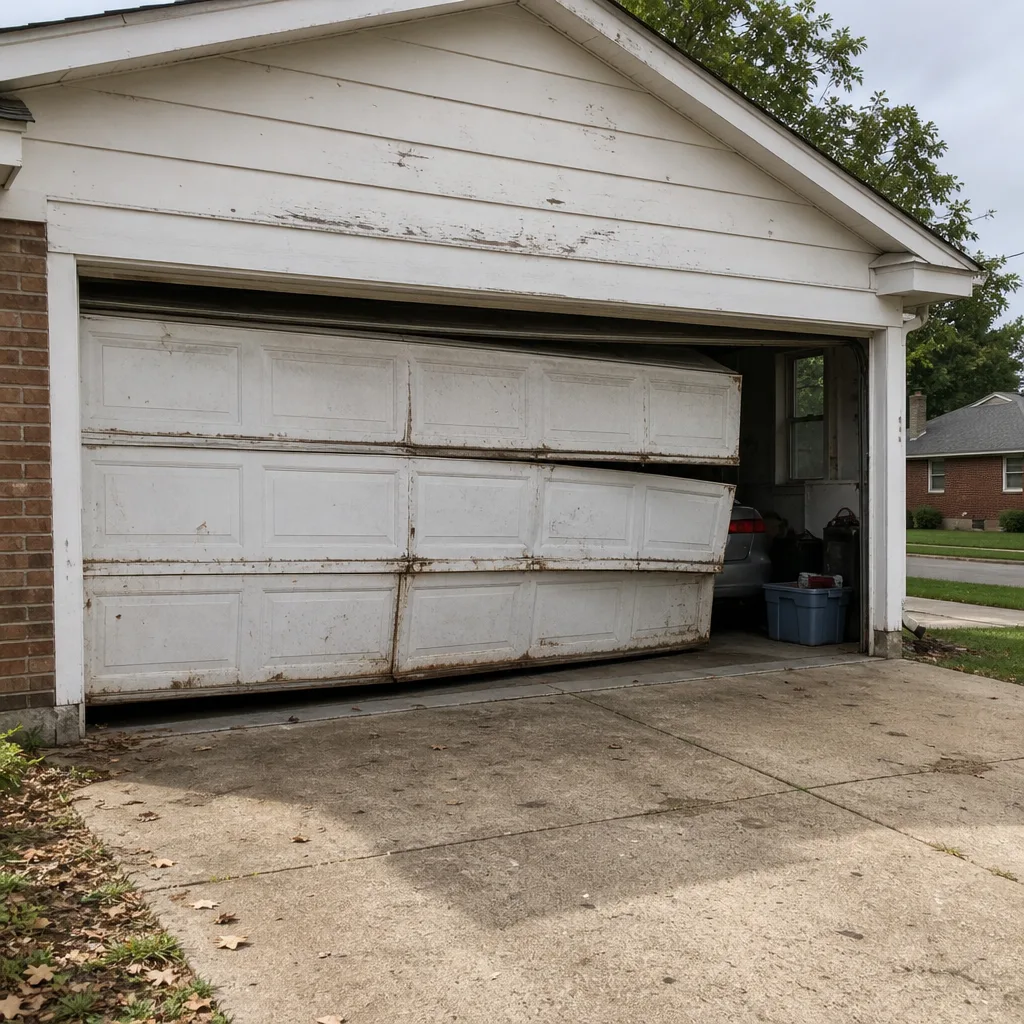 Before
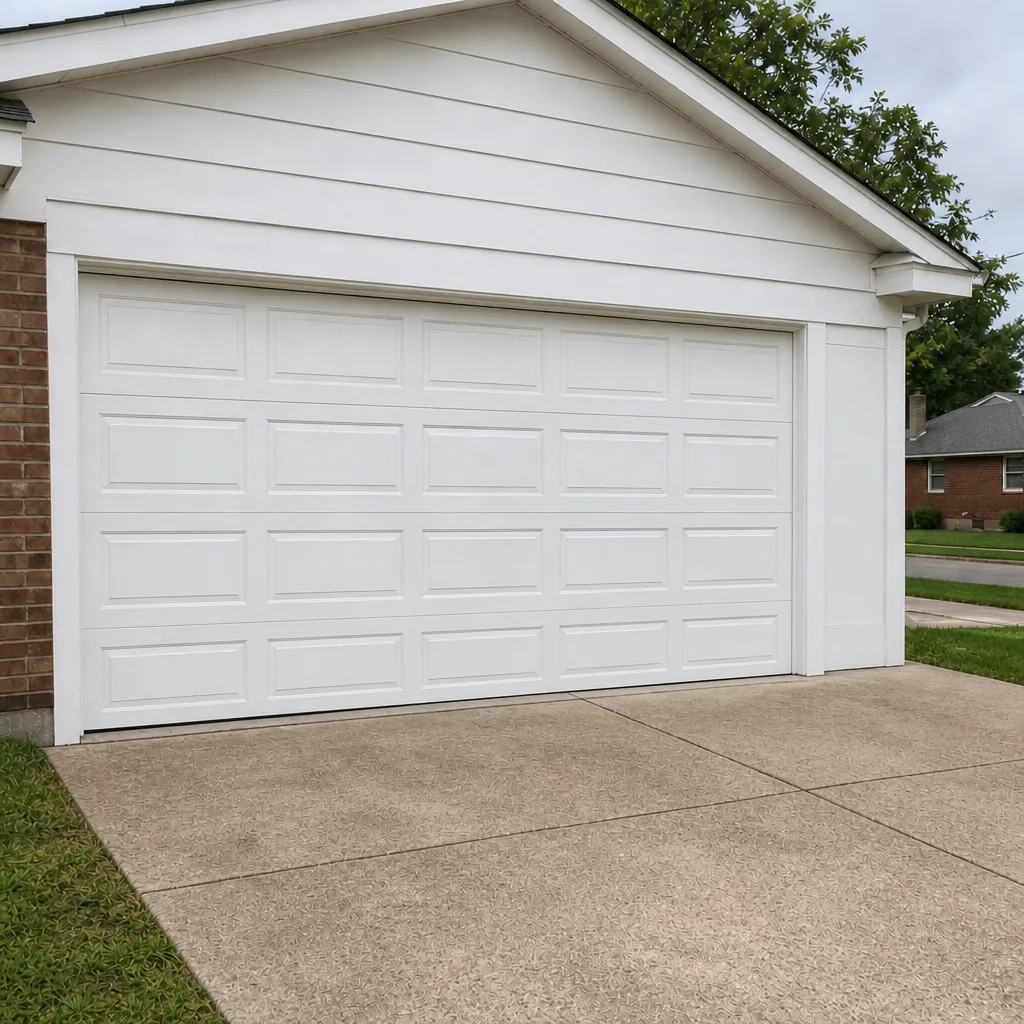 After
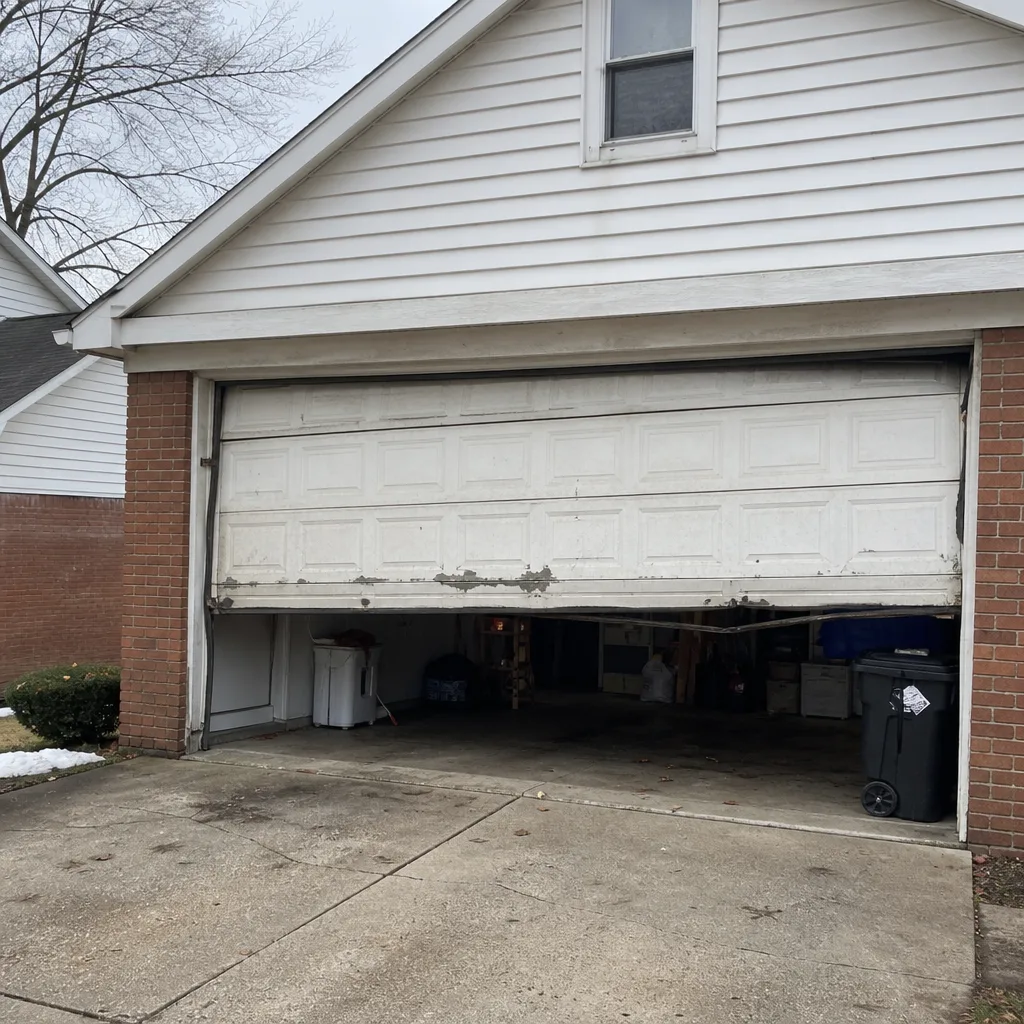 Before
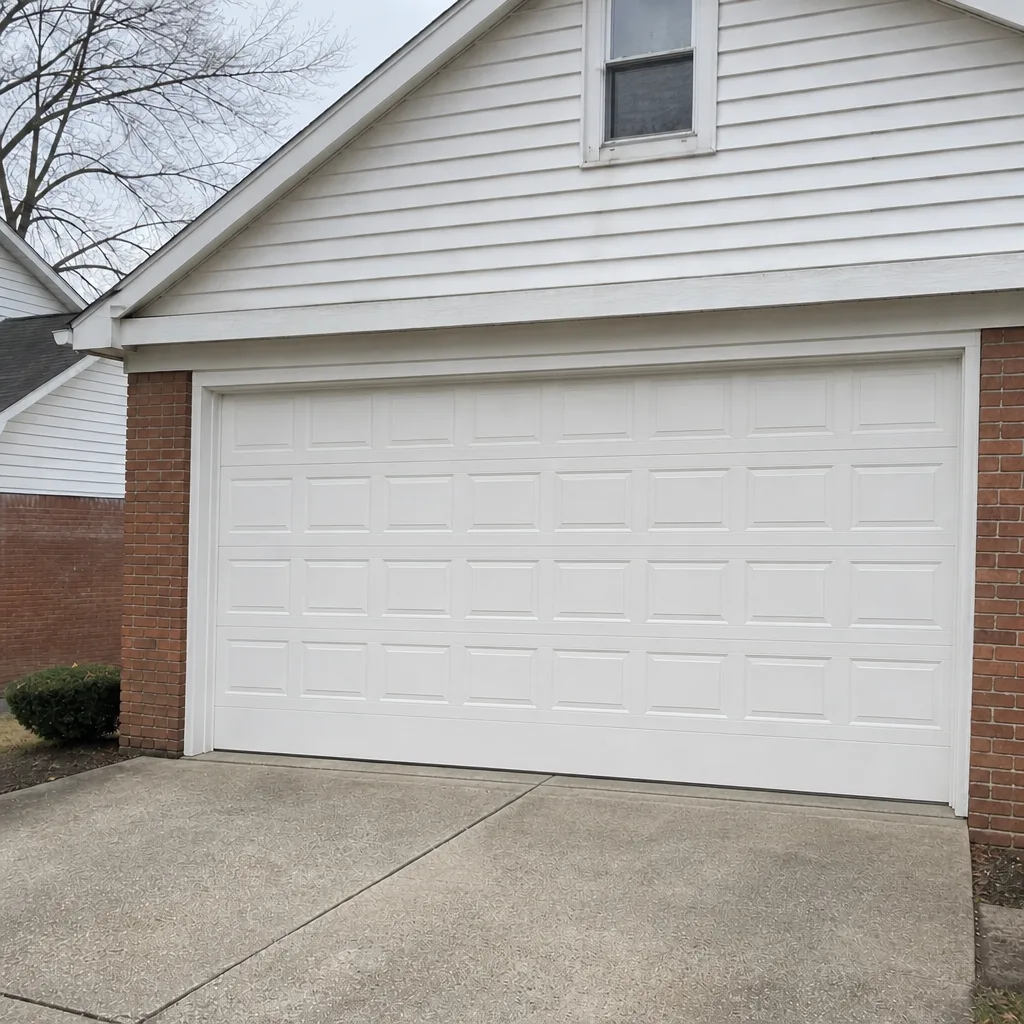 After
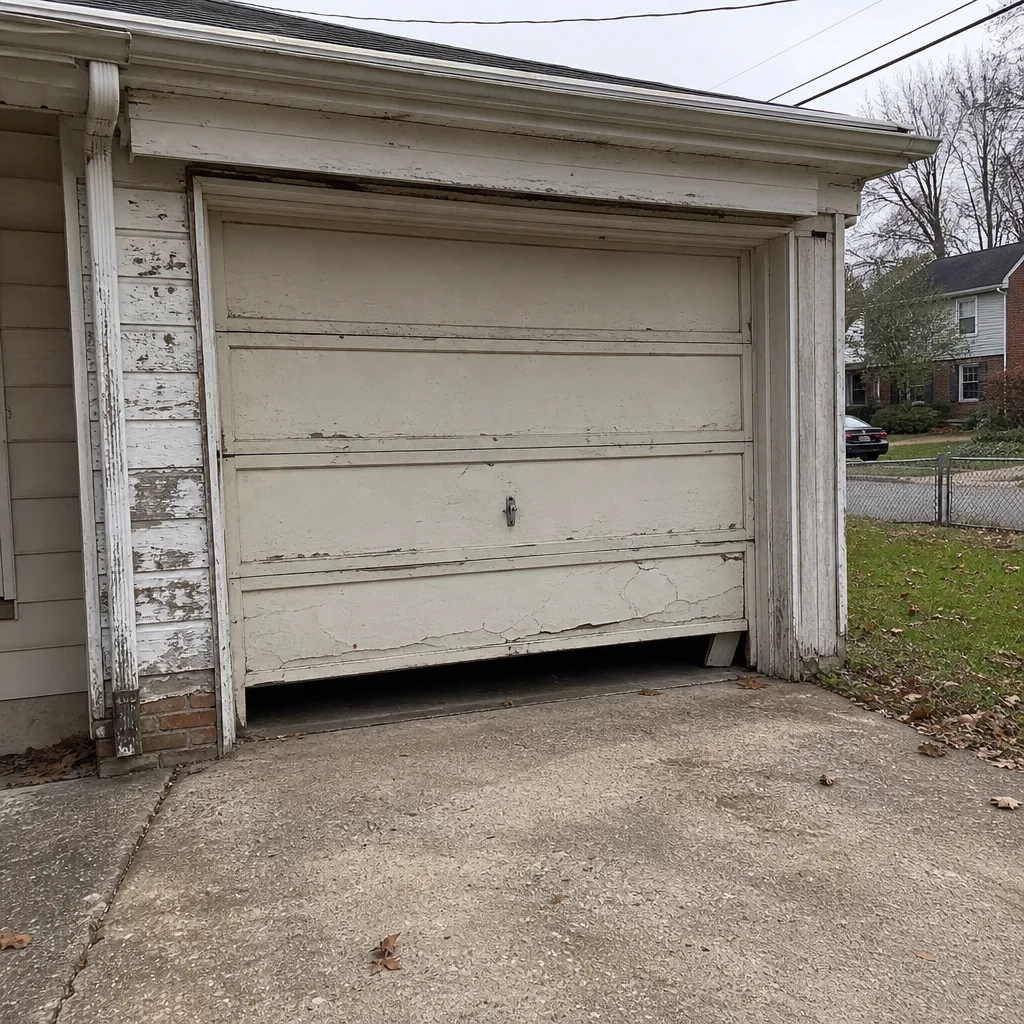 Before
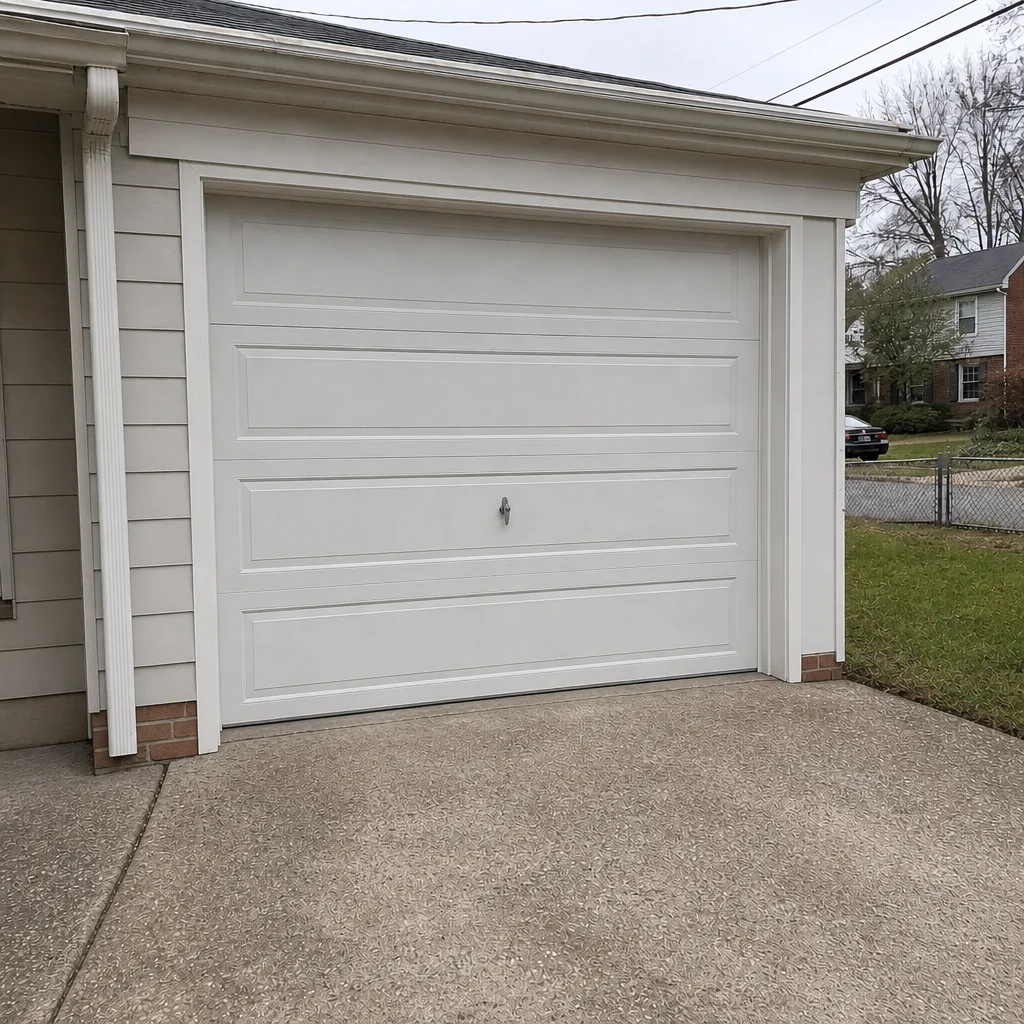 After
When to Call a Professional
Call a technician when the door won’t move at all, when any spring is visibly broken, when a cable is frayed or snapped, when the door has come off the track or is running at an angle, when the safety reverse test fails, or when the balance test shows the door dropping more than a foot. Call sooner rather than later when the grinding, popping, or rattling has gotten louder over a couple of weeks. Springs, cables, and counterbalance parts are genuinely dangerous to work on without training and the right tools. Garage Door Repair Kamm’s Corners offers free estimates in Kamm’s Corners and the surrounding west-side neighborhoods: call (888) 839-8159 to book one. Our technicians have up to 11 years of experience on LiftMaster, Chamberlain, Genie, and Clopay systems, and we’ll tell you exactly what’s worn and what’s fine before any work starts.
Frequently Asked Questions
The most common are a grinding noise on the way up or down, a door that leans to one side, an uneven gap at the bottom, a frayed cable, a remote that needs two presses, and a door that fails the balance test. In Kamm’s Corners, the freeze-thaw cycles between winter and spring also tend to reveal spring wear that wasn’t obvious in the fall. Catching two or three of these together is the strongest signal that something in the counterbalance or roller system is due for service. Call (888) 839-8159 for a free estimate if you’re seeing them at the same time.
Grinding itself is usually a roller or track issue, which is not an immediate hazard, but it will get worse and eventually damage the track or the door panels. The danger is what happens next: a worn roller can fall off the track, and a door that comes off the track can swing or drop. Don’t ignore grinding that’s been going on for more than a couple of weeks. Call (888) 839-8159 if you want a free estimate on the fix.
Yes, the balance test is safe to do yourself as long as you use the manual release cord and don’t try to adjust any spring or cable. Pull the release, lift the door to halfway, let go, and see where it lands. If the door drops more than a foot, book a repair. If it drops all the way, stop using the door and call. Estimates are free, so call (888) 839-8159.
A broken spring means the door has no counterbalance, so the opener is carrying the full weight of the door and will quickly fail if used. A broken opener means the door may still open by hand, but the motor doesn’t run. The two failures sound different: a spring break is usually a loud bang followed by a door that won’t move, while an opener failure is silent. If you can’t tell which it is, stop using the door and call (888) 839-8159.
Once a year is a good baseline for a Kamm’s Corners home, and it’s worth checking your own door every season with the checklist above. A yearly inspection catches worn rollers, tired springs, and dry hinges before they fail. Homes with older wood doors or original hardware benefit from twice-yearly checks. If you haven’t had a service in a while, book a free estimate: call (888) 839-8159.
The local pro who comes to your home is licensed and insured as Ohio requires. Our technicians have up to 11 years of experience on residential garage doors and openers, including the brands you’re most likely to have: LiftMaster, Chamberlain, Genie, and Clopay. The price is quoted and agreed before any work starts, so you know exactly what you’re paying for. Call (888) 839-8159 and we’ll set up a free estimate.
The Bottom Line
Garage doors almost never fail without warning. They grind, lean, squeal, rattle, and slow down for weeks before a part finally goes, and those signals only matter if you read them as one system instead of separate quirks. The four noises, the visual signs, and the balance test cover most of what you need. Anything involving a spring, cable, or the door coming off the track is a stop-using-the-door situation, not a wait-and-see one. If you’re seeing two or more signs at once, or you’re not sure what you’re hearing, get a free estimate. For a straightforward diagnosis on a Kamm’s Corners door, call us at (888) 839-8159.
Written by the team at Garage Door Repair Kamm’s Corners.