Last updated November 20, 2026
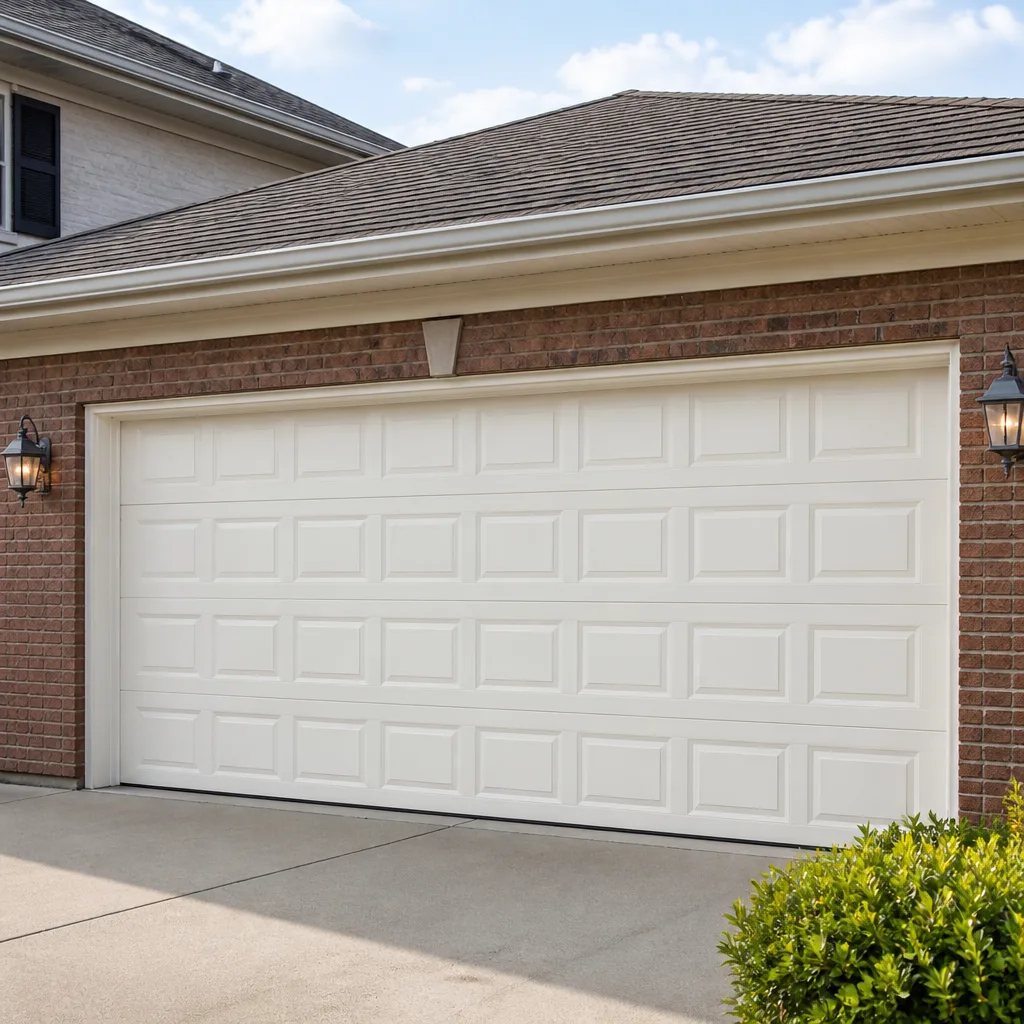 Raised-panel steel
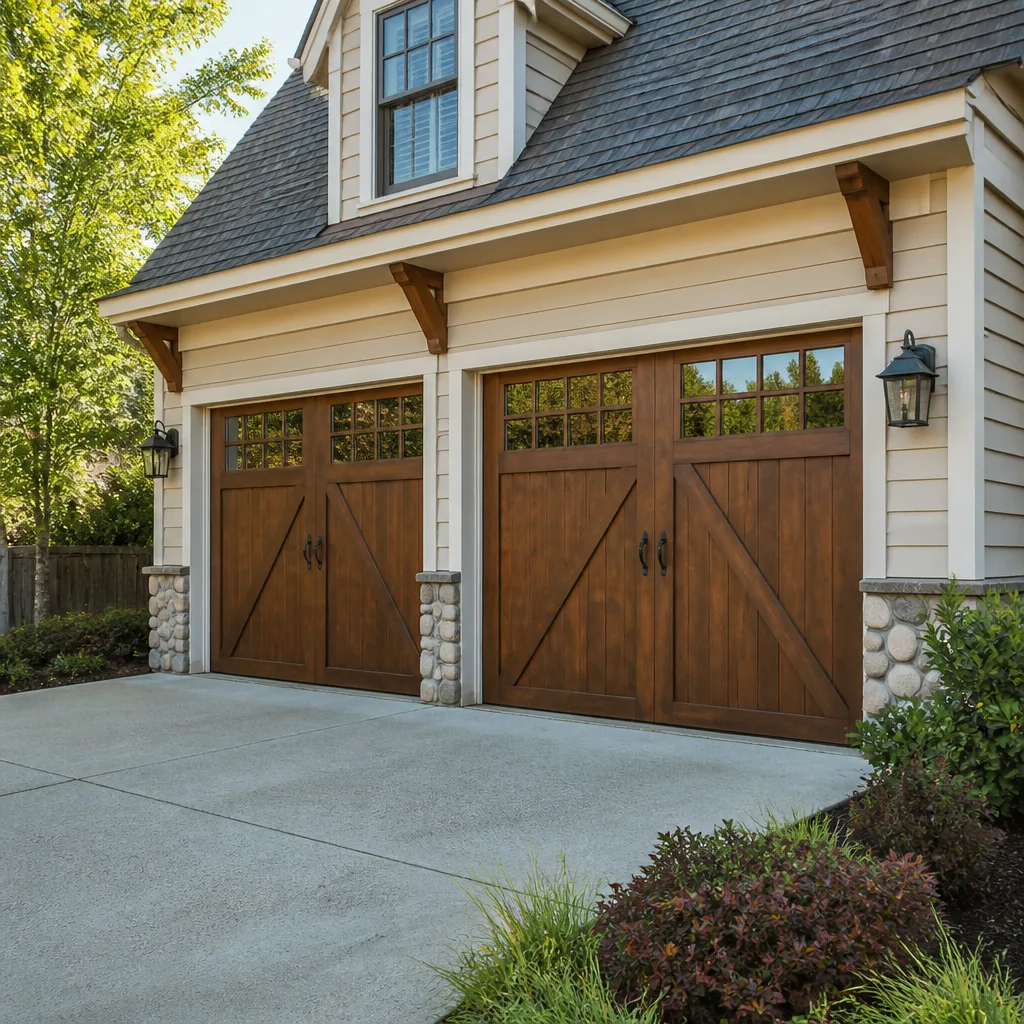 Carriage house
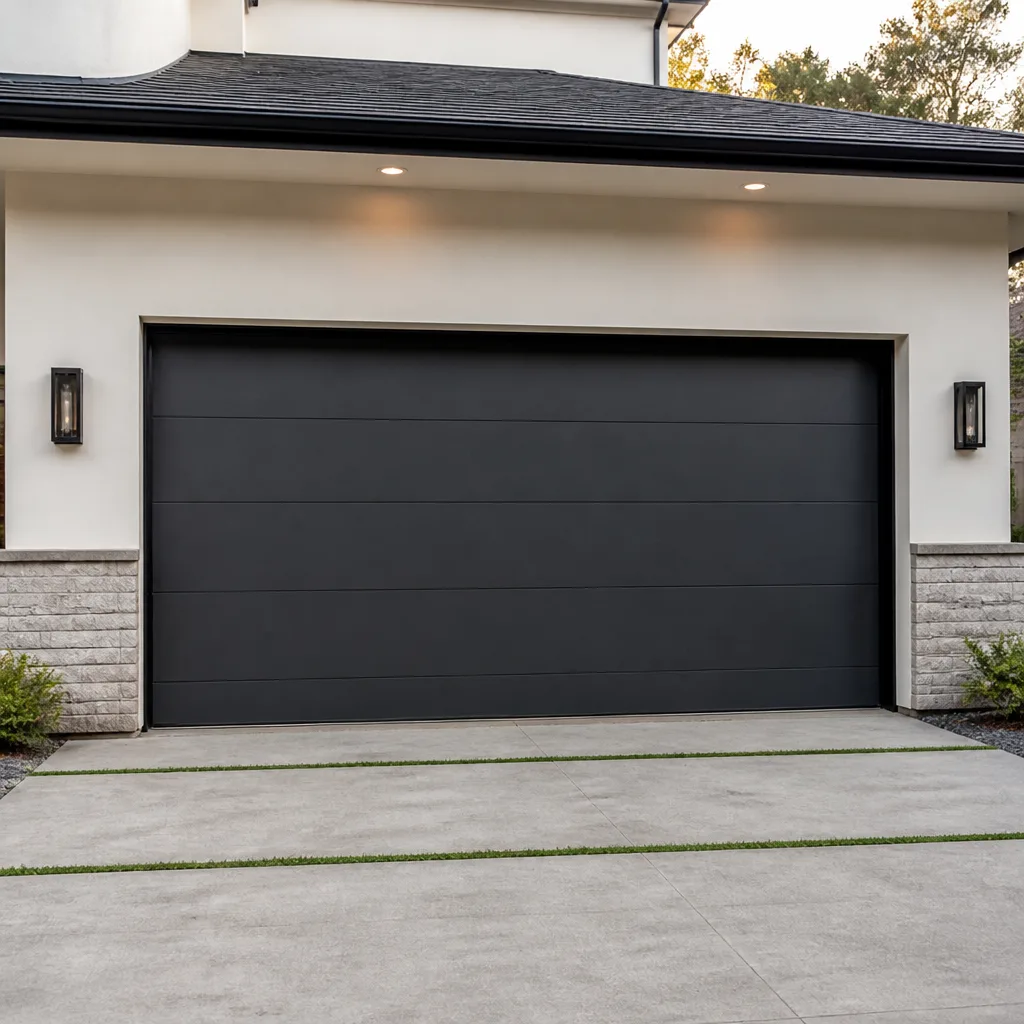 Modern flush
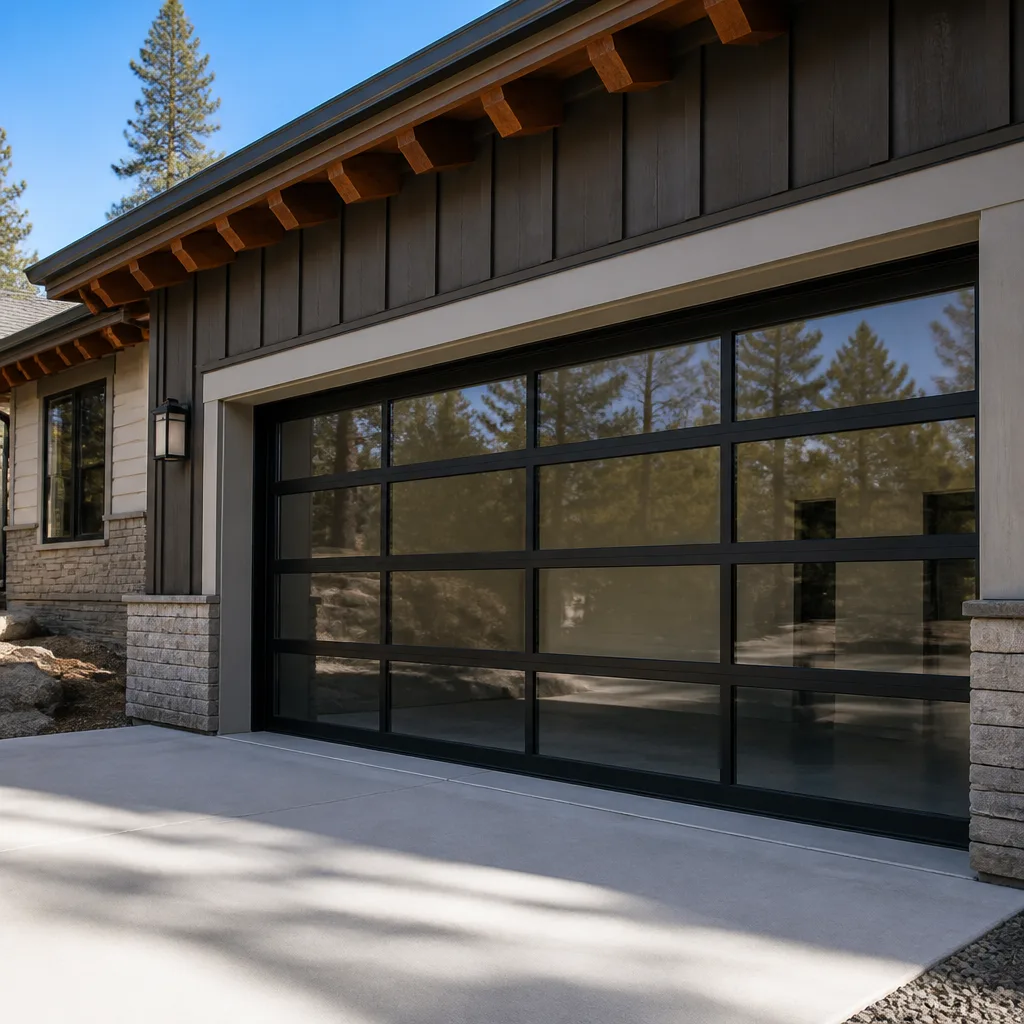 Full-view glass
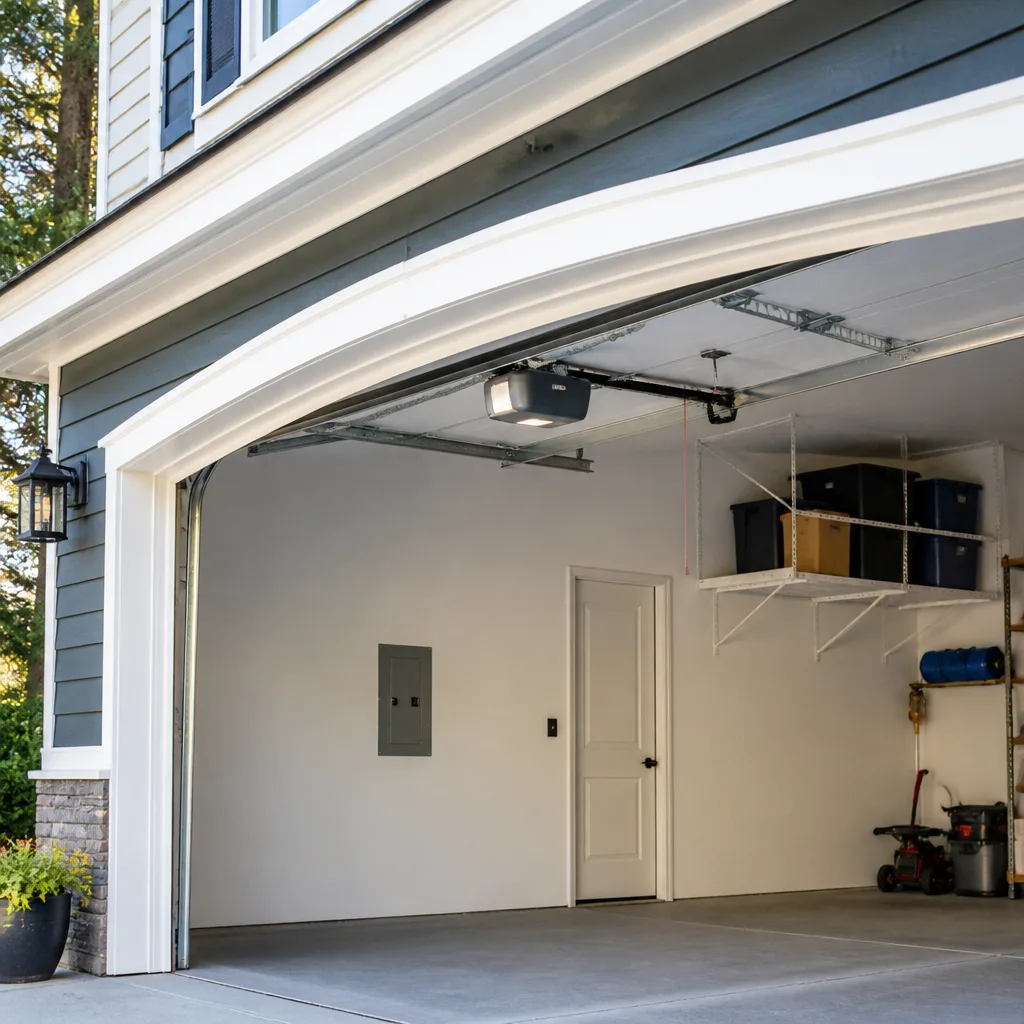 LiftMaster openers
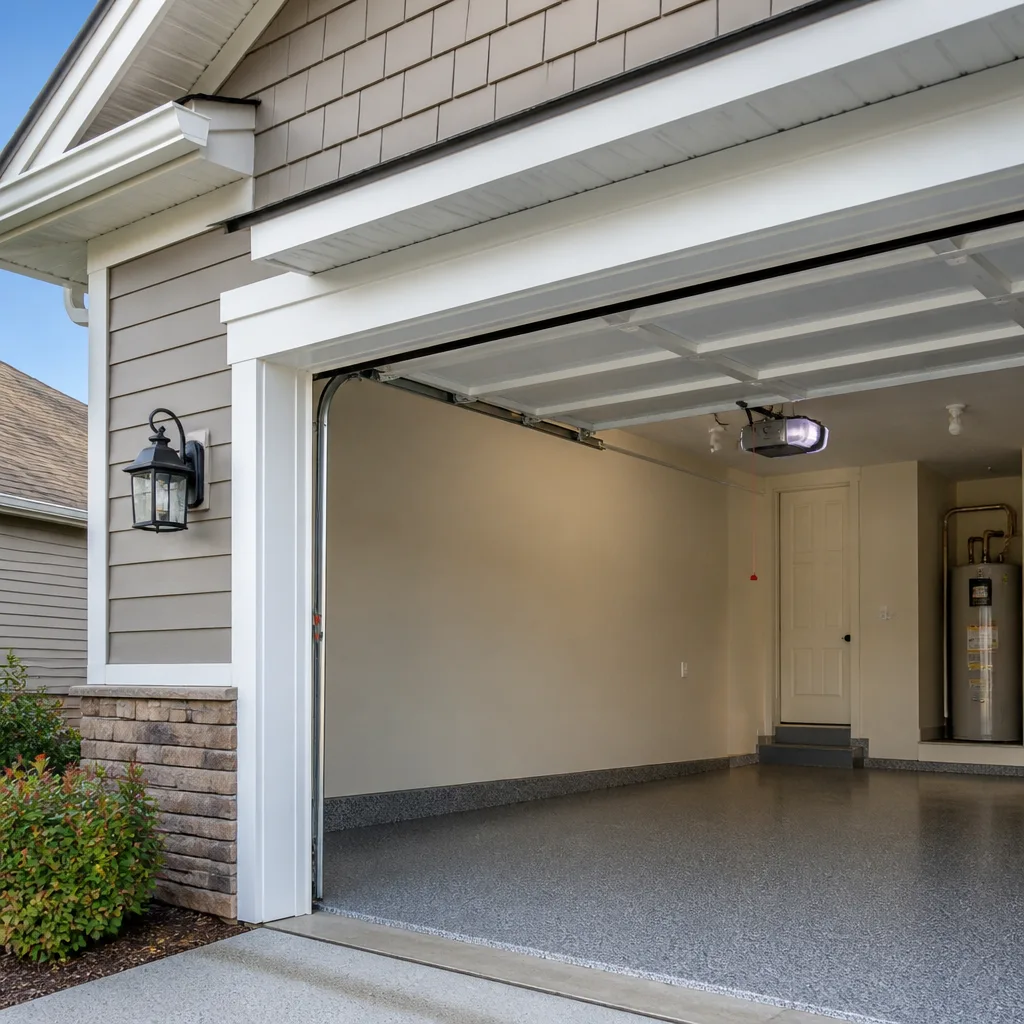 Chamberlain openers
Full 25-point door and opener safety check with every visit - springs, cables, rollers, tracks, and your LiftMaster or Chamberlain opener included
You get a price before we start. It does not change when the pro arrives.
Get your free estimateGarage Door Permits, Codes & Inspections in Kamm’s Corners, OH: What You Need to Know
Most garage door work in Ohio doesn’t need a permit, and that’s exactly why so many homeowners assume none of it does. The line isn’t drawn at “repair versus replace” the way people guess. It’s drawn at structural change, and a new door or a rebuilt opening crosses it. Skip that step in Kamm’s Corners, and the paperwork problem can sit dormant for years until a buyer’s title search or a lender’s inspection drags it into the open at the worst possible moment. This guide walks through when a permit is actually required, what the inspection involves, how unpermitted work surfaces at resale, and why attached-garage fire separation catches so many people off guard.
Quick Answer
In Ohio and across Cuyahoga County, a permit is generally required when you replace a garage door and modify the opening, frame, header or track layout, or when you build or alter the structure itself. Swapping like-for-like panels or replacing a spring, cable, roller or opener usually does not require one. The surest answer for your address is a call to the City of Cleveland’s building department, because the requirement follows the scope of work, not the label on the invoice.
Styles & brands we work with
- Raised-panel steel
- Carriage house
- Modern flush
- Full-view glass
- LiftMaster openers
- Chamberlain openers
Table of Contents
- When Does Garage Door Work Need a Permit in Ohio?
- Repair vs. Replacement: Where the Permit Line Actually Falls
- What the Inspection Actually Involves in Cuyahoga County
- How Unpermitted Work Shows Up at Resale
- Fire-Rated Doors for Attached Garages
- How a Contractor Handles the Permit for You
- Kamm’s Corners Conditions That Affect Your Door and Your Inspection
- What Permits and Inspections Cost
When Does Garage Door Work Need a Permit in Ohio?
A garage door permit is required in Ohio when the work changes the structure or the opening, not when you simply restore what’s already there. That’s the threshold most homeowners get wrong. They hear “permit” and picture a full construction project, or they hear “just a door” and assume the city has no interest. Neither is quite right.
Here’s how the split usually works in practice:
- New door installation in a new or existing opening where the frame, header or track configuration changes: permit territory. The opening is being altered, and that touches structural and life-safety questions.
- Full replacement of a door and its track system with the same size and configuration: often requires a permit depending on the municipality. Ask before you order.
- Spring, cable, roller, hinge or panel replacement: generally no permit. This is maintenance and component repair.
- Opener replacement or repair: generally no permit, though the electrical connection has its own rules if a new circuit is run.
- Adding a garage where none existed, or converting a garage: full building permit, plus whatever else the city requires for the change of use.
In our experience across Kamm’s Corners and the surrounding West Park neighborhoods, the confusion comes from the fact that a door replacement can look identical to a repair from the street. The city cares about the scope on paper, not how it looks from the curb. If you’re replacing the door and reusing the existing opening and track with no dimensional change, ask the building department directly whether your address requires a permit. If you’re altering the opening at all, assume you do.
If your project is a straight replacement or a fresh install, our garage door installation service is where the permit conversation starts, and we’ll tell you up front what your address needs before anything is ordered.
Repair vs. Replacement: Where the Permit Line Actually Falls
Repairs almost never need a permit. Replacements sometimes do. The gray zone in the middle is where homeowners get burned, so it’s worth walking through the difference in plain terms.
A repair keeps the existing door, opening and structure. You’re addressing a failed component: a snapped torsion spring, a frayed cable, a bent track, a dead opener, a cracked panel. None of that changes the building, so the city isn’t inspecting it. Our garage door repair work stays on the repair side of the line the vast majority of the time.
A replacement removes the door and often the track and hardware. If the new door is the same size in the same opening with the same track layout, some municipalities still want a permit and some don’t. If the opening is being widened, heightened, reframed, or the track is being reconfigured to accept a different door style, that’s structural work and a permit is standard.
- Identify what’s changing: the door only, or the opening and structure too?
- Check the door and opening dimensions against the new product’s requirements.
- Call the City of Cleveland building department with the address and the scope.
- Get the answer in writing if you can, and keep it with your home records.
- If a permit is required, pull it before work starts, not after.
The reason this matters in Kamm’s Corners specifically is the housing stock. Many of the homes around the Lorain Avenue corridor and the streets off Rocky River Drive were built with garages that have settled or shifted over the decades. A door that measured true when the house was built may not measure true now, which means a “same size” replacement can quietly turn into a framing job the moment the old track comes down. That’s when a repair scope becomes a replacement scope and the permit question stops being optional.
What the Inspection Actually Involves in Cuyahoga County
A garage door inspection in Cuyahoga County is a visual check of the installed work against the approved scope and the applicable code. It’s usually quick. The inspector looks at the door, the opening, the attachment, the safety features and the fire separation if the garage is attached. They’re not testing your opener’s Wi-Fi. They’re confirming the work matches what was permitted and that it’s safe.
What they typically look at:
- Attachment and anchoring. Are the tracks and spring system secured to sound framing with the right fasteners?
- Opening dimensions and header. Does the finished opening match the permit and support the load above it?
- Fire separation. On an attached garage, is the wall and door assembly intact where it needs to be?
- Safety devices. Are the photo-eye safety sensors and the auto-reverse function working? These are required on openers and inspectors do check them.
- Clearances. Track, door travel and headroom within the tolerances the door and opener need.
Timing in Cuyahoga County generally runs on a short window once the work is ready for inspection, often a matter of days rather than weeks, but scheduling depends on the city’s inspection load. The permit itself is usually issued faster than the inspection is scheduled, which is why we tell homeowners to start the permit conversation before the door is ordered rather than after it arrives. Doing it in that order keeps the install from sitting idle waiting on paperwork.
One thing worth knowing: an inspection that fails usually fails on something small and fixable, like a missing sensor bracket or an anchor that needs a second fastener. It’s rarely a teardown. The cost of a re-inspection is annoyance and time, not a rebuild.
How Unpermitted Work Shows Up at Resale
Unpermitted garage door work surfaces at resale through the title search, the buyer’s inspection, or the lender’s appraisal, and any one of those can stall a closing. It doesn’t always. Plenty of unpermitted work sells without a hiccup because nobody looks closely enough. But when it does surface, it surfaces at the moment you have the least leverage and the most to lose.
The paths it takes:
- The buyer’s home inspection. An inspector who notices a new door or a modified opening may flag it and recommend the buyer confirm permits. Buyers ask. Sellers scramble.
- The title search. Permit records are part of the public record on a property. A title company or a diligent attorney can pull the permit history and see a gap between work done and permits pulled.
- The lender’s appraisal or underwriting. Some lenders require confirmation that structural or life-safety work was permitted before they’ll fund.
- The buyer’s attorney’s request for permits. Common in Cuyahoga County closings, and increasingly common as buyers get more careful.
When a gap is found, the fix is usually to pull an after-the-fact permit, which means an inspection of work that’s already complete, possibly opening walls or removing trim to see what’s behind them, and paying for the privilege of doing it under time pressure. If the work doesn’t meet code, it has to be corrected. That’s where the real cost lives, not in the permit fee itself.
The quiet complication is that an unpermitted door replacement can make a future buyer nervous about everything else in the house. Once one thing looks skipped, buyers start asking what else was. That’s a negotiating problem you can’t easily undo. Pulling the permit when the work happens is cheap insurance against a conversation you don’t want to have three years later.
For homeowners replacing a door as part of a larger sale-prep project, our Garage Door Repair Kamm’s Corners page is a good starting point for what the job involves and what documentation you’ll want on hand.
Fire-Rated Doors for Attached Garages
An attached garage is separated from the living space by a fire-rated assembly, and the door between the garage and the house is part of that assembly. This surprises most homeowners, because the door they think about is the big overhead one. The door that matters for code is usually the pedestrian door from the garage into the house, and sometimes the wall and ceiling assembly itself.
What this means in practice:
- If your garage is attached and you’re replacing the door between the garage and the house, it needs to be a fire-rated door of the type the code requires for that separation. A standard interior door is not a substitute.
- The wall and ceiling between an attached garage and the living space need to maintain their fire separation. Cutting into them, or leaving openings unsealed, can compromise it.
- Self-closing hardware on that door is commonly required so it isn’t left open, which would defeat the separation.
- If you’re finishing a garage, adding a room above it, or converting space, the fire separation requirements get more involved and a permit is a given.
This is one of the code points that catches Kamm’s Corners homeowners during a remodel rather than a door replacement. Someone finishes the garage, adds a doorway, swaps the entry door for something nicer, and doesn’t realize they’ve altered a rated assembly. It comes up at inspection, and sometimes at resale. If you’re touching the wall or door between an attached garage and the house, treat it as a permit question first and a design question second.
Ask the City of Cleveland building department what the current requirement is for your specific assembly. Codes get updated, and the answer depends on the construction type and the age of the home.
How a Contractor Handles the Permit for You
A qualified contractor pulls the permit, schedules the inspection, and manages the paperwork so you don’t have to. That’s the short version. The longer version is that the permit process is where a specialist and a generalist diverge, because the contractor who does garage doors every day knows what the inspector will look at and builds the job to pass the first time.
What the process looks like when we’re running it:
- We confirm the scope and the address. Replacement versus repair, opening changes versus like-for-like. That determines whether a permit is needed.
- We check with the city. We confirm the requirement for your address and the current code points that apply to your door and opening.
- We pull the permit before work begins. The permit is issued to the job, and the paperwork stays with the property.
- We install to the permitted scope. Anchoring, fire separation and safety devices are built in, not added after a failed inspection.
- We schedule and meet the inspection. We’re on site when the inspector arrives and we handle any correction on the spot if something needs adjustment.
- We hand you the closeout documentation. Keep it with your home records. It’s what a buyer’s attorney will ask for later.
Our technicians have up to 11 years of experience, and the permit conversation is part of the job, not an upsell. If you’re weighing a garage door opener repair against a full replacement, we’ll tell you which side of the permit line each option falls on before you commit. The written estimate sets the price, and the permit cost, where one applies, is quoted up front rather than discovered on the invoice.
Kamm’s Corners Conditions That Affect Your Door and Your Inspection
Kamm’s Corners sits on Cleveland’s west side, and the housing stock here shapes what a garage door job actually involves. Many of the homes in the neighborhood were built in the first half of the twentieth century, with detached garages set back off the alley and attached garages on the newer infill. That mix means the permit question lands differently street to street.
What we see in the neighborhood:
- Older detached garages with settled slabs. A garage floor that has heaved or settled changes the door’s geometry. A replacement door that fits the nominal opening may not fit the actual one, which turns a simple swap into a framing adjustment and a permit.
- Narrow alley access off the Lorain Avenue corridor. Door and track delivery has to fit the approach, and some installs need a narrower door profile than the original. That’s an opening change.
- Lake-effect winters. Northeast Ohio’s freeze-thaw cycles work on the concrete, the track anchors and the door’s bottom seal. A door that passed inspection in the fall can develop a gap at the threshold by spring. That’s a maintenance item, not a code violation, but it’s the kind of thing an inspector notices on a follow-up.
- Attached garages in the newer construction. Fire separation matters more here, and homeowners remodeling those spaces need to treat the wall and door between garage and house as a rated assembly.
- Mixed door brands across the neighborhood. Craftsman and Chamberlain openers are common on the older homes, and LiftMaster and Raynor systems show up on the newer ones. Knowing the brand before the inspection matters, because safety-device requirements vary by opener generation.
If you’re unsure what you have, we work on the brand you already have. Craftsman, LiftMaster, Chamberlain, Raynor and the rest of the major lines are all familiar territory, and knowing the model tells us what the inspector will expect to see working.
What Permits and Inspections Cost
Permit fees in Cuyahoga County generally run a modest amount relative to the door itself, and the exact figure depends on the municipality and the valuation of the work. The permit is not the expensive part of a replacement. The expensive part is doing it twice.
Typical ranges we see for the door work itself, with the permit quoted separately where it applies:
| Item | Typical Estimated Range |
|---|---|
| Single spring replacement | $180 – $340 |
| Matched pair of springs (usually replaced together) | $360 – $680 |
| Torsion spring conversion from extension springs | $350 – $700 |
| Cable replacement (per side) | $120 – $250 |
| Opener repair | $150 – $350 |
| Opener replacement (unit and install) | $350 – $800 |
| Door replacement, single-car, like-for-like | $1,100 – $2,400 |
| Door replacement, double-car, like-for-like | $2,000 – $4,200 |
| Opening modification or reframing | Quoted per job |
The permit fee is quoted separately and varies by city and scope. The written estimate sets the final price, and every price is quoted and agreed before any work starts. No surprises after the fact.
If you’re wondering whether a repair is cheaper than a replacement, it usually is, and it’s also the path that skips the permit entirely. A spring that’s failed is a repair. A door that’s failing structurally is a replacement. We’ll tell you which one you’re looking at.
Common Mistakes to Avoid
- Assuming all garage door work is permit-free because repairs usually are. Repairs rarely need one. Replacements sometimes do. The scope decides, not the label on the invoice.
- Pulling the permit after the work is done. After-the-fact permits invite an inspection of finished work, and if it doesn’t meet code it has to be corrected. Start the permit before the door is ordered, not after it’s installed.
- Treating the door between an attached garage and the house like an interior door. It’s part of a fire-rated assembly. Swapping it for a standard door compromises the separation and fails inspection.
- Ordering a replacement door before measuring the actual opening. In older Kamm’s Corners garages, the slab has often settled. A door sized to the nominal opening may not fit the real one, turning a same-size replacement into a framing job and a permit.
- Not keeping the closeout documentation. The permit and inspection record are what a buyer’s attorney will ask for at resale. Keep them with the home records. They’re worth more than the fee you paid for them.
- Letting a handyman handle a job that needs a permit. An unlicensed installer can’t pull the permit, which means the work happens without one. That’s the gap that surfaces years later.
- Skipping an inspection on a door that passed but has since shifted. Northeast Ohio’s freeze-thaw cycles move concrete and track anchors. A door that closed cleanly in fall can develop a threshold gap by spring. It’s maintenance, but it’s also what an inspector notices on a follow-up.
See the difference
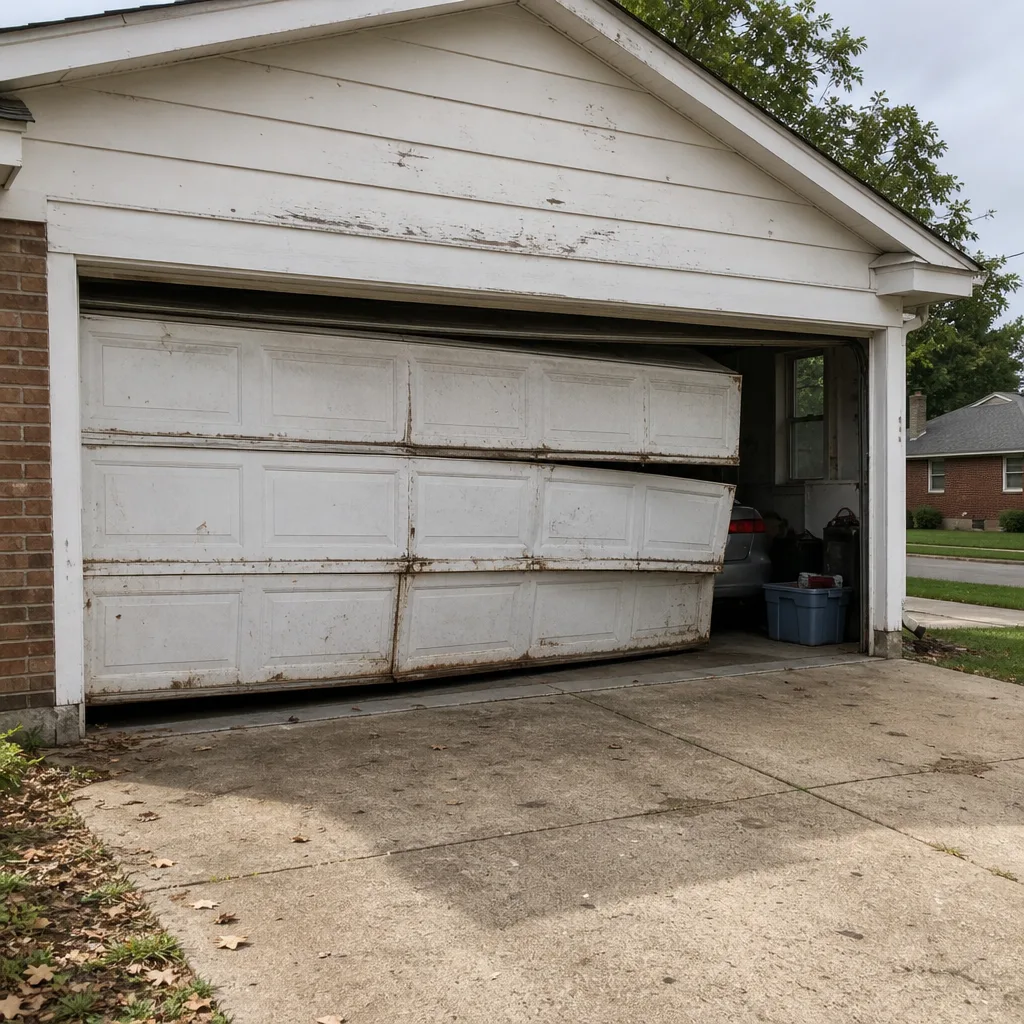 Before
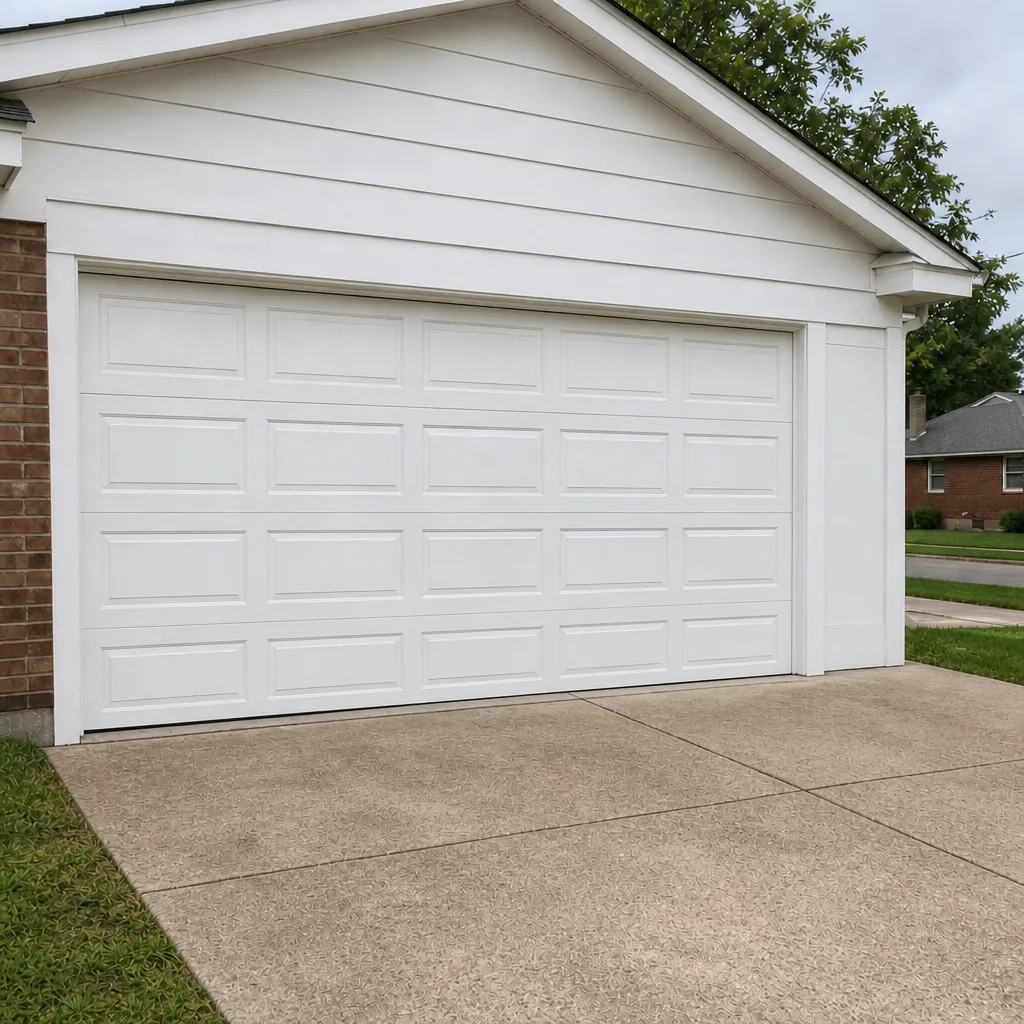 After
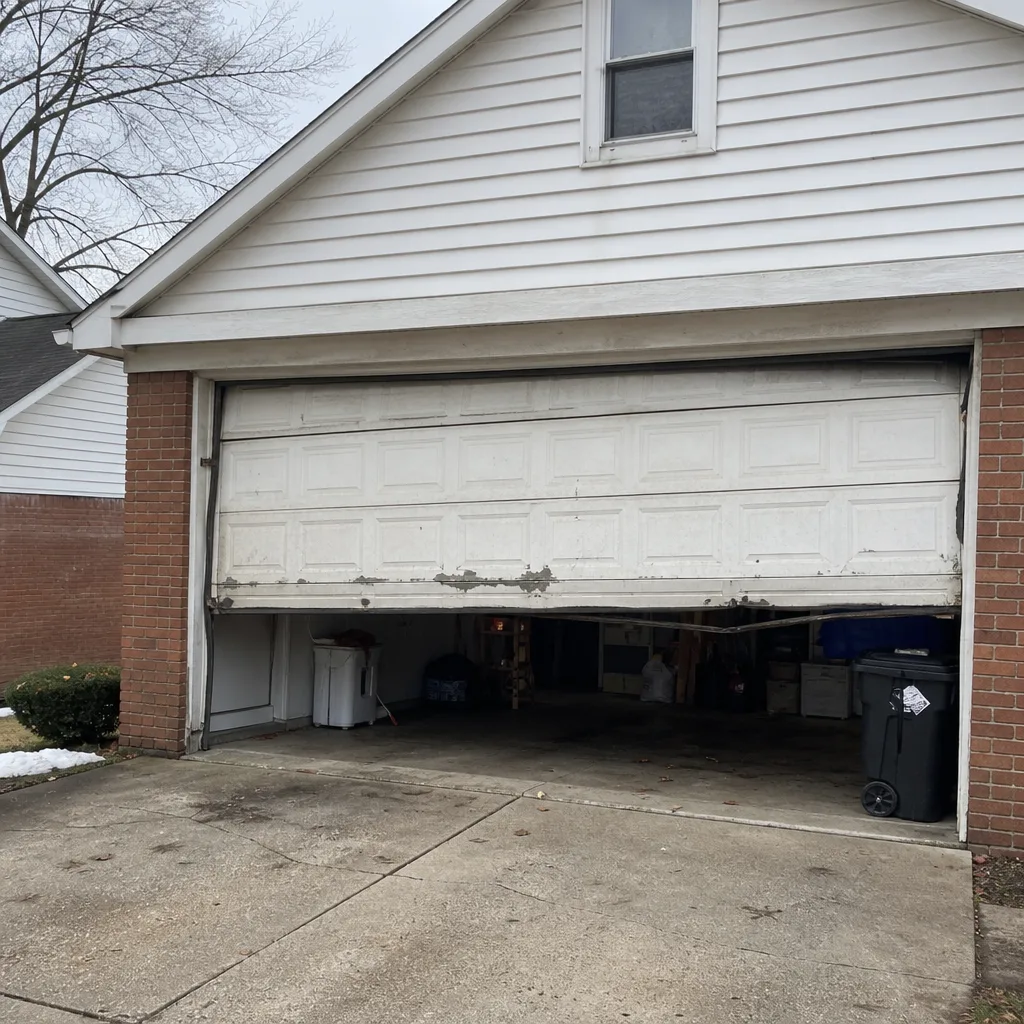 Before
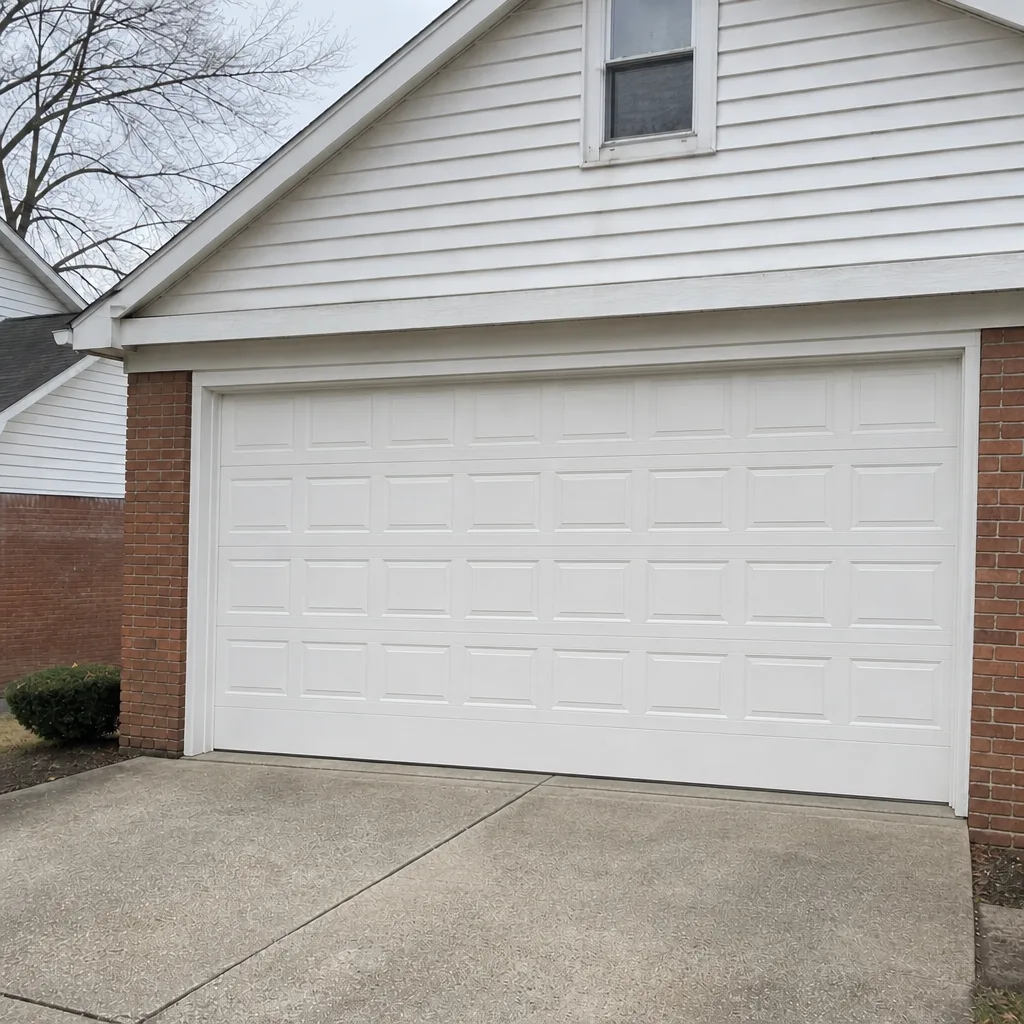 After
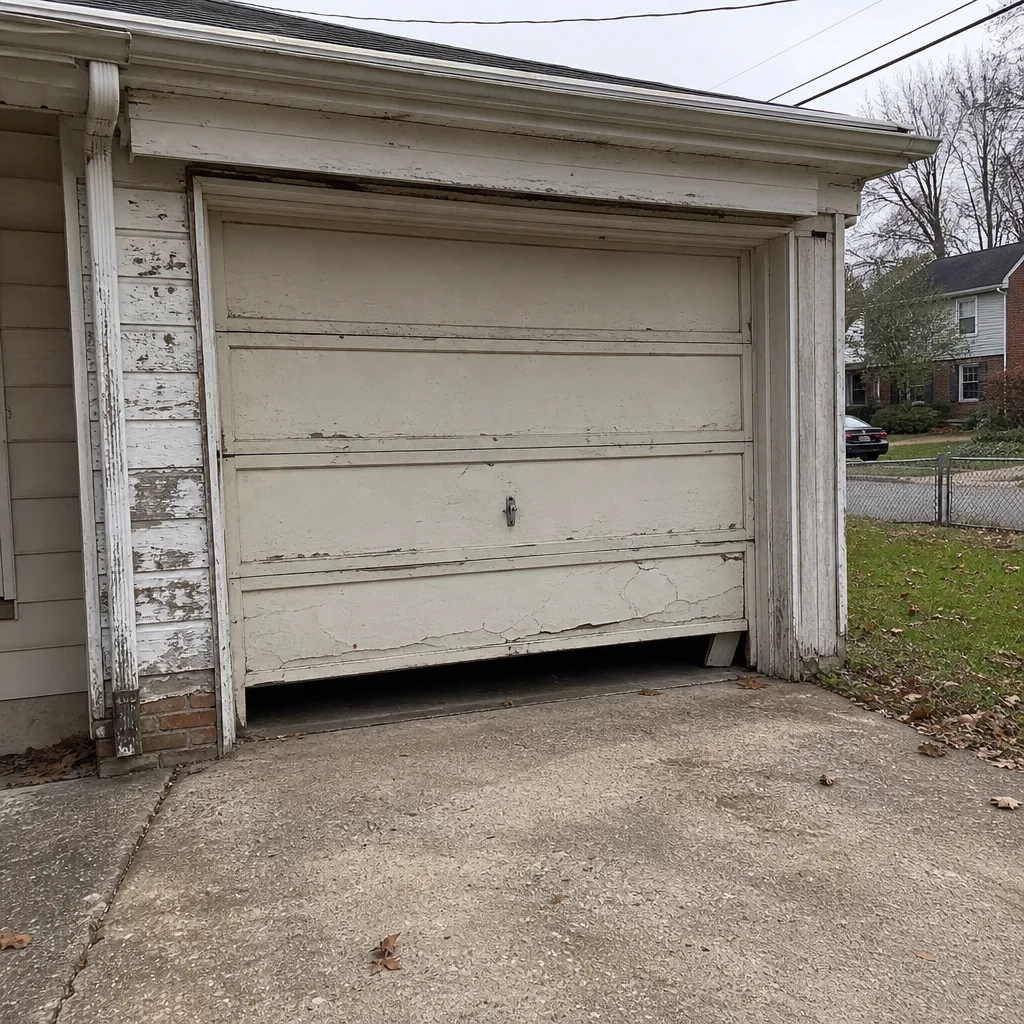 Before
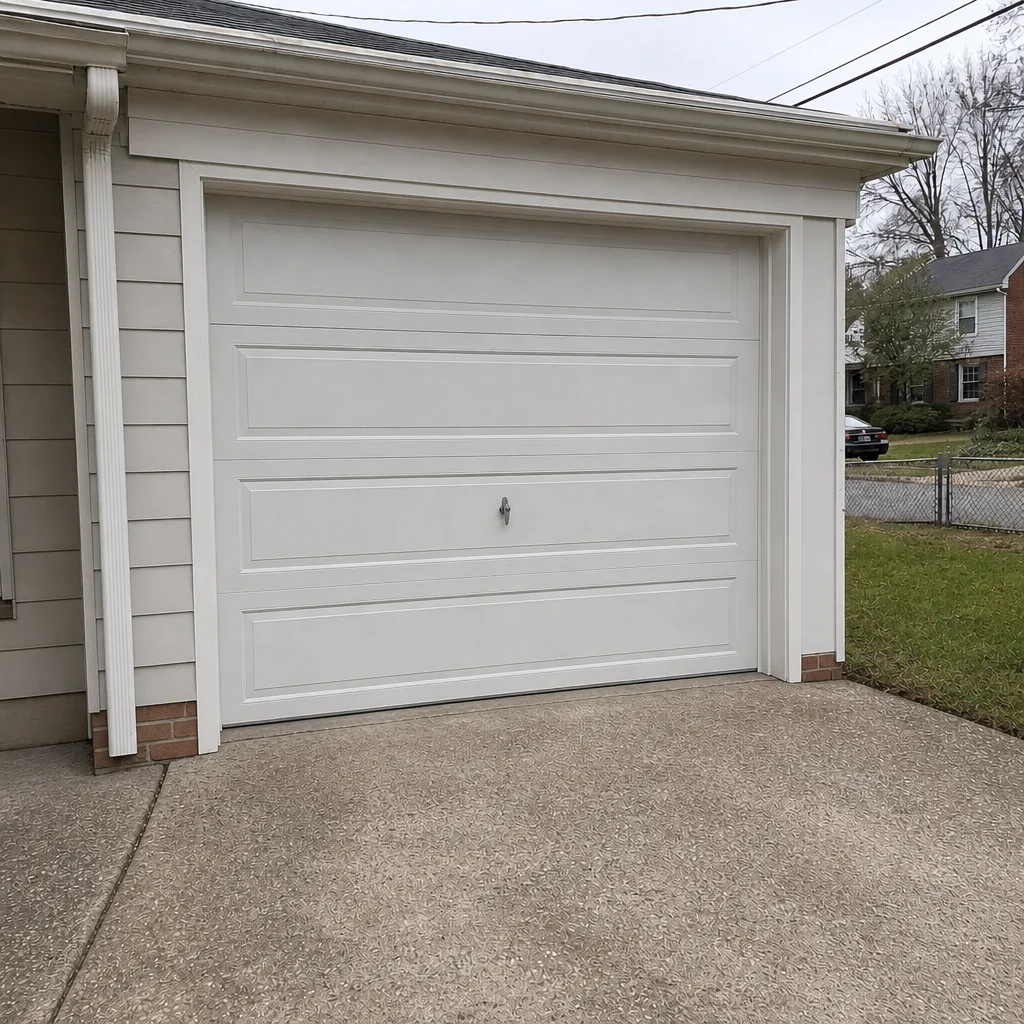 After
When to Call a Professional
Call a professional when the door is going to be replaced or the opening is going to change, because that’s the work that needs a permit and an inspection, and it’s the work an unlicensed installer will do without either. Call us when the door won’t open or close and you can’t tell whether it’s an opener problem or a door problem. Call when a spring has snapped, which is the one garage door failure a homeowner should never try to fix, because torsion springs and the cables under tension can cause serious injury if handled without the right tools and training. Call when an attached-garage door between the house and the garage needs replacing and you’re not sure it’s fire-rated. Call when you’re prepping a home for sale and can’t find the permit records for work that was done before you bought it. Garage Door Repair Kamm’s Corners offers free estimates in Kamm’s Corners, and we’ll tell you what your address actually needs before anything is ordered. Call (888) 839-8159.
Frequently Asked Questions
It depends on the scope. A like-for-like replacement in an unchanged opening may or may not require a permit depending on the City of Cleveland’s current rules for your address, while any change to the opening, framing, header or track configuration generally does. Call the building department with your address and scope, or call us at (888) 839-8159 and we’ll walk through it with you. Estimates are free.
A garage door inspection is typically a short visual check, often under an hour, once the work is ready and the inspection is scheduled. The scheduling window depends on the city’s inspection load, usually a matter of days rather than weeks. The permit is generally issued faster than the inspection is scheduled, which is why we start the permit before the door is ordered.
It can, through the title search, the buyer’s home inspection, or a lender’s underwriting review, and any one of those can stall a closing. It doesn’t always surface, but when it does the fix is an after-the-fact permit and an inspection of finished work. Pulling the permit when the work happens is the cheap path. Call (888) 839-8159 for a free estimate on the work itself.
Yes. The door between an attached garage and the living space is part of a fire-rated assembly and needs to be a fire-rated door of the type the code requires for that separation, not a standard interior door. Self-closing hardware is commonly required so the door isn’t left open. Ask the City of Cleveland building department for the current requirement on your specific assembly.
No. A garage door replacement is a homeowner expense. Homeowner’s insurance may cover damage from a specific covered event, but routine replacement, wear and upgrades are not covered, and the city doesn’t fund residential door replacements. Call (888) 839-8159 for a free estimate, and the written quote sets the price before any work starts.
The local professionals we connect you with are licensed and insured as their state requires, and our technicians have up to 11 years of experience. We work on the brand you already have, including Craftsman, LiftMaster, Chamberlain and Raynor, so the person who shows up knows your door and your opener. Call (888) 839-8159 to book a free estimate.
The Bottom Line
The permit question in Kamm’s Corners comes down to scope. Repairs almost never need one. Replacements sometimes do, and any change to the opening, framing or fire separation usually does. The inspection that follows is a short visual check, not a rebuild. The real risk isn’t the permit fee, it’s the paperwork gap that surfaces at resale and turns into a negotiating problem you can’t easily undo. Pull the permit when the work happens, keep the closeout documentation, and let a specialist handle the process so you don’t have to. Our technicians have up to 11 years of experience, and we work on the brand you already have.
If you’re a Kamm’s Corners homeowner weighing a repair against a replacement, or you’re prepping a home for sale and need to know where you stand, call Garage Door Repair Kamm’s Corners at (888) 839-8159 for a free estimate. We’ll tell you what your address needs, quote the work and any permit up front, and agree the price before anything starts. Your door, done right.
Written by the team at Garage Door Repair Kamm’s Corners.